
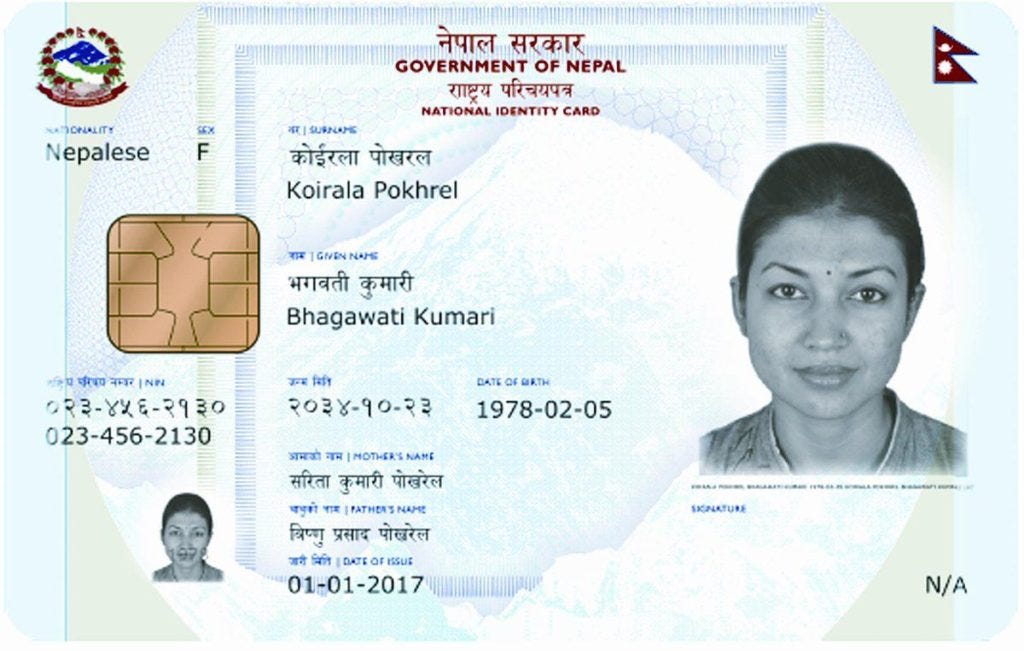
Kathmandu: Nepal Rastra Bank (NRB), which is also preparing to make the National Identity (National ID) Card mandatory for existing bank accounts, has now made it mandatory for digital wallet users as well.
Through the 15th amendment to the Integrated Directive on Payment Systems, 2082 (2025/26), NRB’s Payment Systems Department has introduced a provision requiring National ID details when opening and operating digital wallet accounts.

Under the new directive, licensed payment service providers (PSPs) must verify the details of Nepali citizens against the electronic records of the National ID system before opening a digital wallet account.
Additionally, by the end of Ashoj 2082 (mid-October 2025), licensed institutions must obtain a self-declaration from wallet users—through a mobile application or another appropriate channel—confirming whether they possess a National ID.
For Nepali citizens who already have a National ID, wallet providers must update their National ID number in the wallet system by the end of Ashoj 2083 (mid-October 2026) via the mobile application or another suitable method.

For citizens who have not yet obtained a National ID, wallet providers must send monthly reminders through the mobile app or other appropriate channels, requesting them to update their customer identification (KYC) once they receive their National ID.
NRB has provided certain exemptions for Nepali citizens living abroad and for people with physical disabilities.
Under these provisions, Nepali citizens residing overseas may open a digital wallet online even if they do not yet have a National ID, provided they submit other required identification documents. However, they must update their National ID details within 35 days of returning to Nepal.
Similarly, citizens who are unable to care for themselves, are physically incapacitated, or otherwise vulnerable may continue to open and use digital wallet accounts based on alternative identification documents, even if they do not have a National ID.
According to NRB, this rule has been introduced in line with the concept of a Centralized Know Your Customer (Centralized KYC) system. The objective is to reduce financial risks associated with individuals holding multiple bank accounts and digital wallets, and to help prevent cybercrime, money laundering, and the misuse of digital wallets for illegal financial activities.
